The Royal Splendour of Maharaja Bhupinder Singh of Patiala
The History, Jewellery, Turban Jewels and Legacy Behind This Iconic Portrait
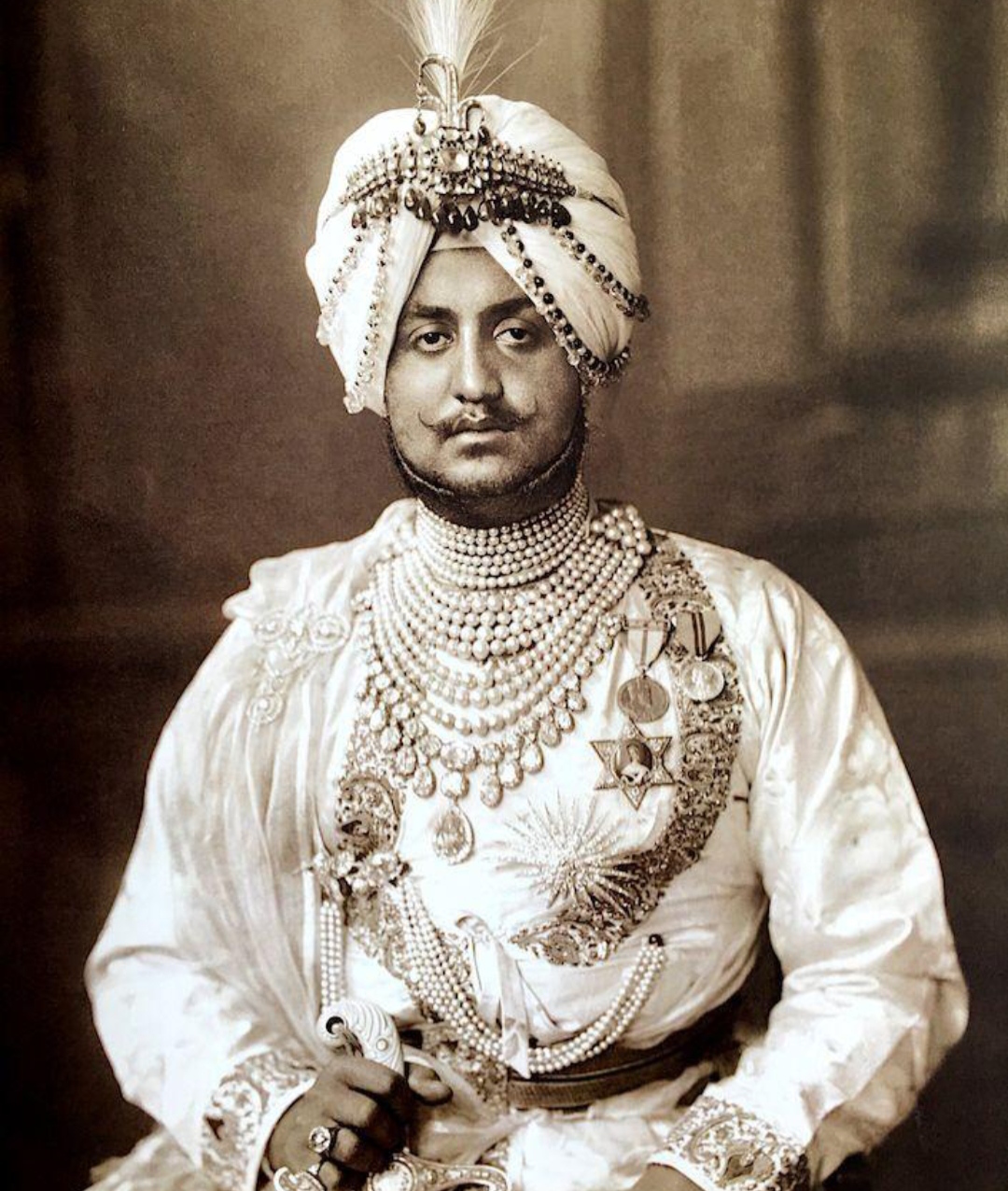
The magnificent photograph appears to depict Bhupinder Singh of Patiala, one of the
Written byThe Velvet Carat Studio
Published
The Royal Splendour of Maharaja Bhupinder Singh of Patiala
The magnificent photograph appears to depict Bhupinder Singh of Patiala, one of the most celebrated and flamboyant Maharajas of the princely states of India. His extraordinary love of jewellery became legendary, and his name remains permanently connected with some of the most spectacular jewels ever created for Indian royalty.
The image is particularly striking because it captures an important aspect of Indian royal culture: jewellery worn by a Maharaja was not merely decoration. It communicated sovereignty, wealth, ancestry, ceremony, status and identity.
Historical records and museum collections document Bhupinder Singh wearing elaborate turbans, sarpech ornaments, pearl necklaces and precious-stone jewellery. A 1911 portrait of him in the National Portrait Gallery collection specifically records jewellery, pearls, necklaces, precious stones and traditional head attire.
Who Was Maharaja Bhupinder Singh?
Maharaja Bhupinder Singh was born in 1891 and became Maharaja of Patiala in 1900, succeeding his father, Maharaja Rajinder Singh. He ruled the princely state of Patiala until his death in 1938.
Patiala was one of the important princely states of the Punjab region. Its royal household possessed enormous wealth accumulated over generations, and the Patiala treasury contained an extraordinary collection of jewels.
Bhupinder Singh became famous not only as a ruler but also as a sportsman, patron, and international figure. He was an accomplished cricketer and captained the Indian cricket team that toured England in 1911. He later became Chancellor of the Indian Chamber of Princes from 1926 to 1930.
The Sarpech — The Jewel of Royal Authority
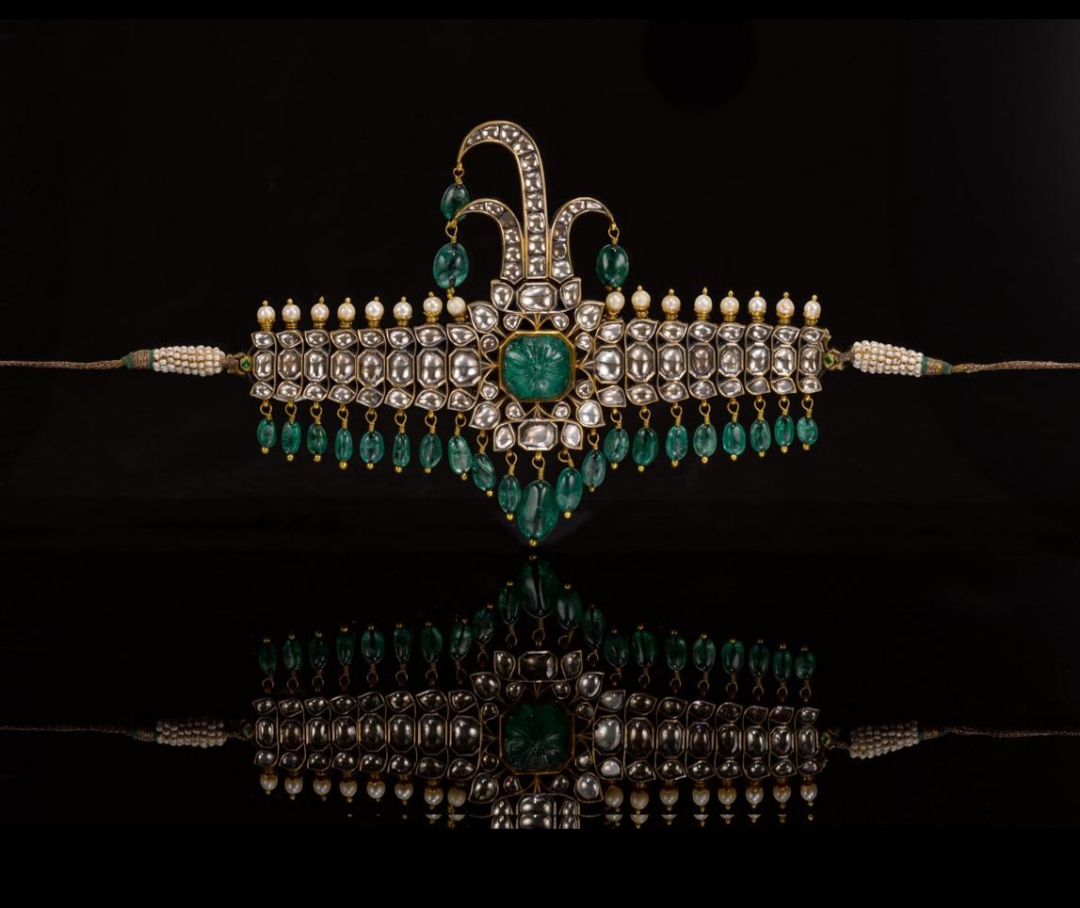
One of the most fascinating pieces is the jeweled ornament mounted at the front of the turban.
It belongs to the tradition of the sarpech, sometimes described in historical sources as an aigrette or turban ornament.
The sarpech was much more than a fashionable accessory. It was associated with aristocratic and royal status and became one of the most recognizable forms of Indian male jewellery.
The Extraordinary Pearl Necklace
The most visually dominant feature is the extraordinary collection of pearl strands surrounding the Maharaja's neck.
Historical sources specifically record Bhupinder Singh wearing a necklace consisting of fourteen strands of natural pearls.
That detail is remarkable.
The necklace creates a cascading effect across the chest. Instead of a single pendant being the centre of attention, the entire necklace becomes a field of light.
Pearls were especially powerful in royal Indian jewellery because they created an appearance of wealth without depending entirely on the brilliance of diamonds.
Their soft lustre also worked beautifully with traditional Indian textiles.
Why Were Pearls So Important in Indian Royal Jewellery?
Pearls have had a long association with wealth and royalty across the Indian subcontinent.
Unlike diamonds, pearls do not produce sharp flashes of light. Their beauty is softer — almost luminous.
For a Maharaja dressed in ceremonial clothing, multiple strands of pearls created visual richness, symmetry, elegance, movement, a sense of abundance, and contrast against embroidered textiles.
The fourteen-strand necklace associated with Bhupinder Singh is therefore an extraordinary example of jewellery being used as part of the entire royal costume rather than as an isolated ornament.
Precious Stones and Royal Craftsmanship
The Patiala royal jewellery tradition was famous for combining precious gemstones with exceptionally skilled craftsmanship.
Diamonds, emeralds, rubies and pearls were among the important materials associated with Bhupinder Singh's jewels. His relationship with European jewellery houses also introduced new approaches to setting Indian gemstones.
This period was especially significant because Indian rulers increasingly travelled to Europe and commissioned major jewellery houses such as Cartier, Boucheron and others to transform traditional Indian gemstones into contemporary designs.
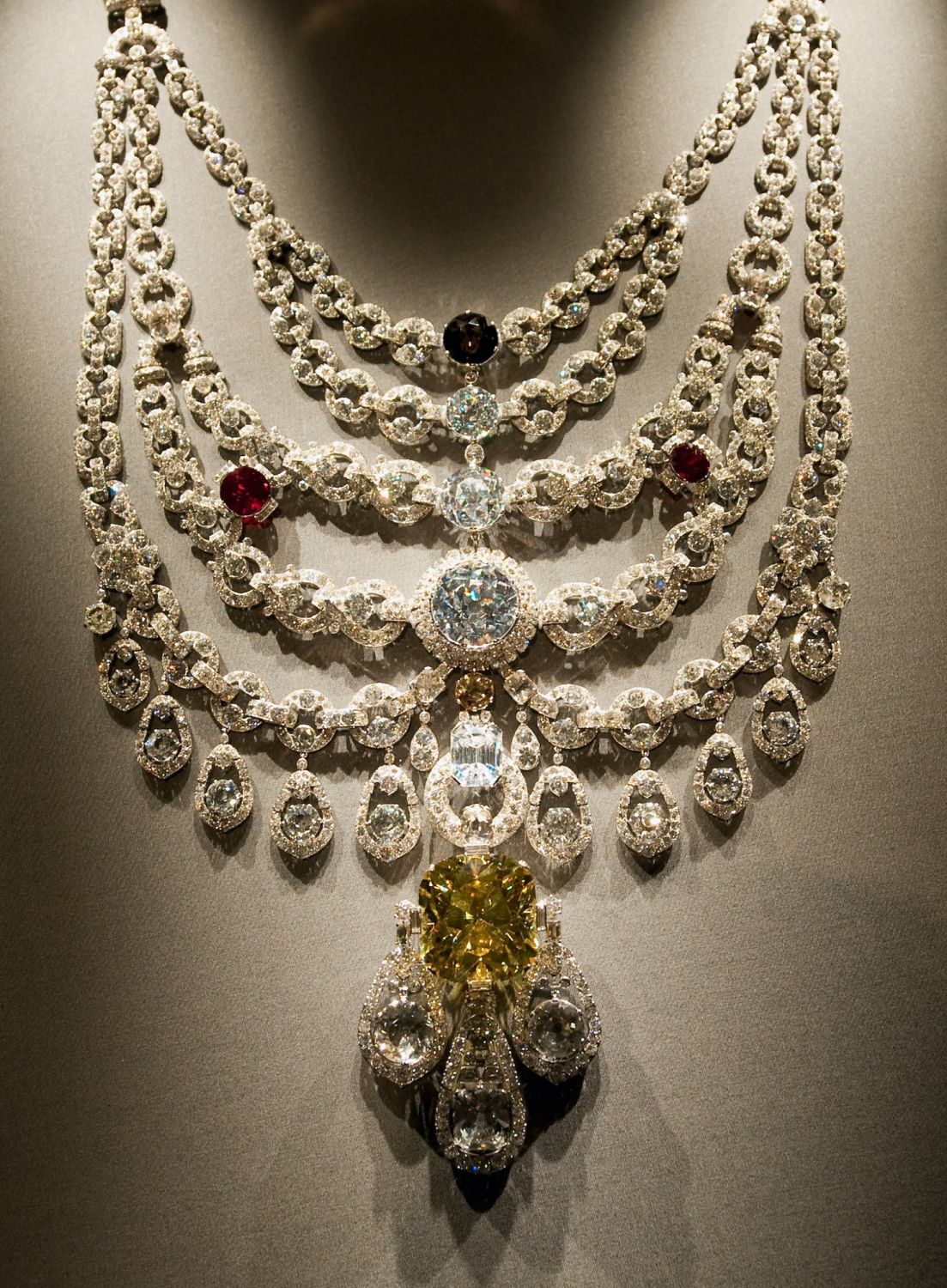
Around 1925, the Maharaja commissioned Cartier to work with gemstones from the Patiala treasury. The famous necklace was completed in 1928.
The result became known as the Patiala Necklace. It was extraordinary even by royal standards. The original necklace contained approximately 2,930 diamonds, More than 1,000 carats of diamonds, five major rows/chains, Burmese rubies, and a 234.6-carat De Beers yellow diamond.
The enormous yellow diamond was the centrepiece of the necklace.
Cartier transformed the Maharaja's inherited gemstones into an extraordinary piece combining Indian royal gemstones with European Art Deco craftsmanship.
Indian Heritage Meets European Art Deco
This is perhaps the most important part of Bhupinder Singh's jewellery story.
The Maharaja did not simply abandon traditional Indian jewellery. Instead, he participated in a fascinating cultural exchange. India had enormous traditions of gemstone cutting, kundan setting, enamelling, pearls, and architectural motifs.
European jewellery houses brought different techniques and design languages, particularly the geometric aesthetic of the Art Deco era.
The result was something completely new. Indian gemstones, Indian royal heritage, European platinum craftsmanship, Art Deco design.
This fusion helped influence the international jewellery world of the early twentieth century.
The Jewellery Legacy Continued
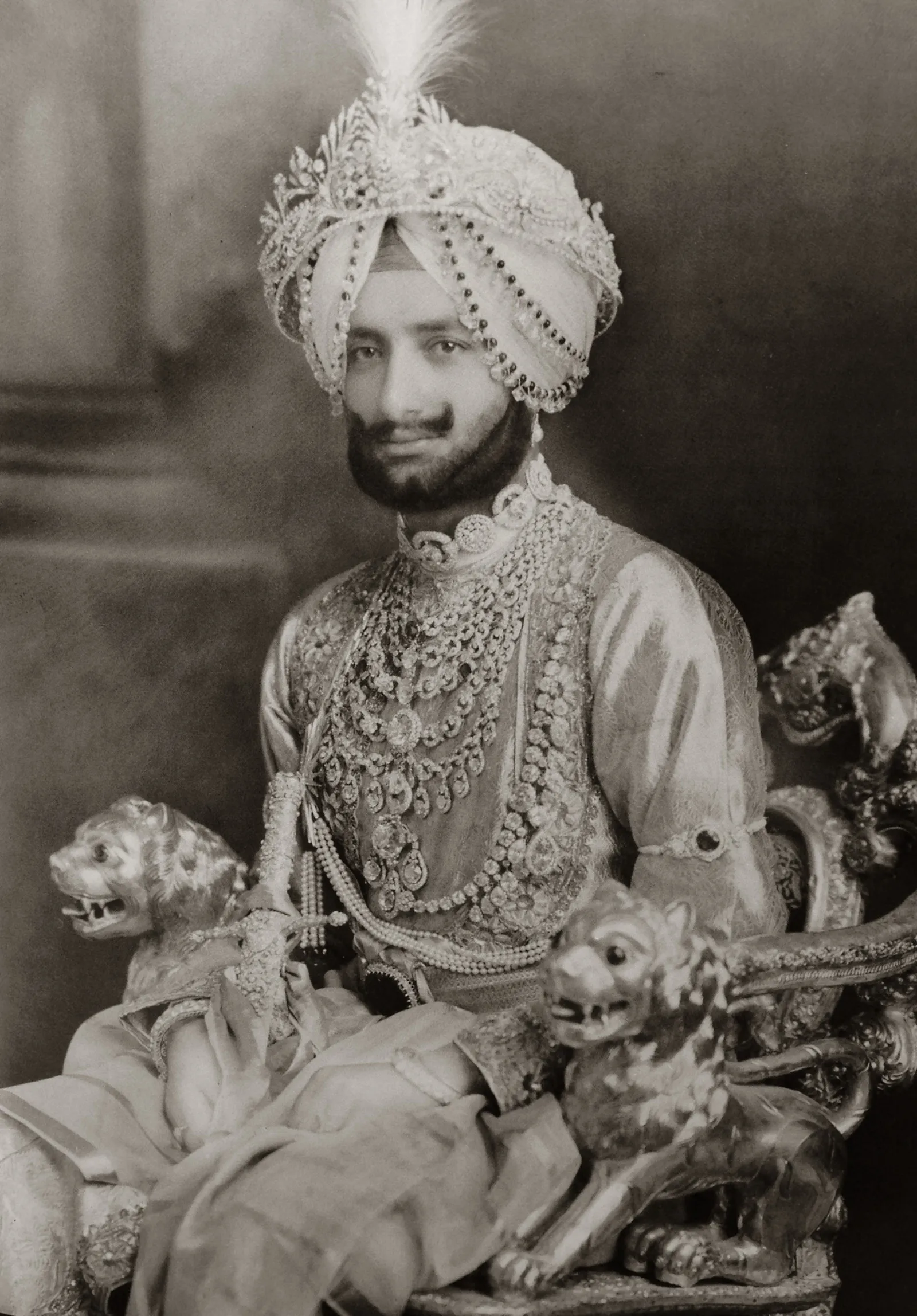
Bhupinder Singh's son and successor, Maharaja Yadavindra Singh, also became associated with the famous Patiala jewellery tradition.
Yadavindra Singh wearing important Patiala jewels, including the famous necklace. This demonstrates an important feature of Indian royal jewellery. Jewellery was inherited as part of dynastic identity. A necklace could pass from father to son. A turban ornament could remain within a royal treasury. A precious stone could be removed from one jewel and placed into another. The jewellery therefore evolved together with the dynasty.
The Craftsmanship Behind Such Jewellery
Creating jewellery of this type required specialists working in different fields. A royal jewel could involve gemstone cutters, pearl specialists, goldsmiths, enamel artists, diamond setters, polishers, designers, stringers, metalworkers, miniature craftsmen.
Traditional Indian jewellery workshops had developed extremely sophisticated techniques over centuries. When royal patrons commissioned European houses, those houses had to work with Indian gemstones and understand the aesthetic requirements of their Indian clients.
This exchange produced some of the most extraordinary jewellery of the early twentieth century.
More Than Luxury: A Record of Indian History
There is a danger in looking at this photograph only as an image of extravagance.
The jewellery tells a much larger story. It tells us about:
Indian princely states.
The Patiala dynasty.
Sikh royal culture.
Traditional Indian dress.
European influence during the colonial period.
International luxury jewellery.
The movement of gemstones between India and Europe.
The transformation of traditional jewellery into modern designs.
They preserve details that written history cannot always communicate.
Final Thought
This is not simply a portrait of a man wearing expensive jewellery. It is a portrait of an era. Every pearl represents craftsmanship. Every gemstone represents wealth and history. Every strand represents royal tradition.
The sarpech represents authority. The turban represents identity. And the entire ensemble represents the extraordinary world of the Indian princely courts.
Maharaja Bhupinder Singh's jewellery legacy survives not merely because the jewels were valuable, but because they became symbols of an entire cultural age.
The Patiala jewels remain among the most fascinating chapters in the history of Indian jewellery — a story of royal ambition, craftsmanship, inherited treasures, international design, lost jewels and enduring beauty.
From the quiet glow of fourteen strands of pearls to the legendary 2,930-diamond Patiala Necklace, Bhupinder Singh transformed jewellery into a statement of identity, power and history.